
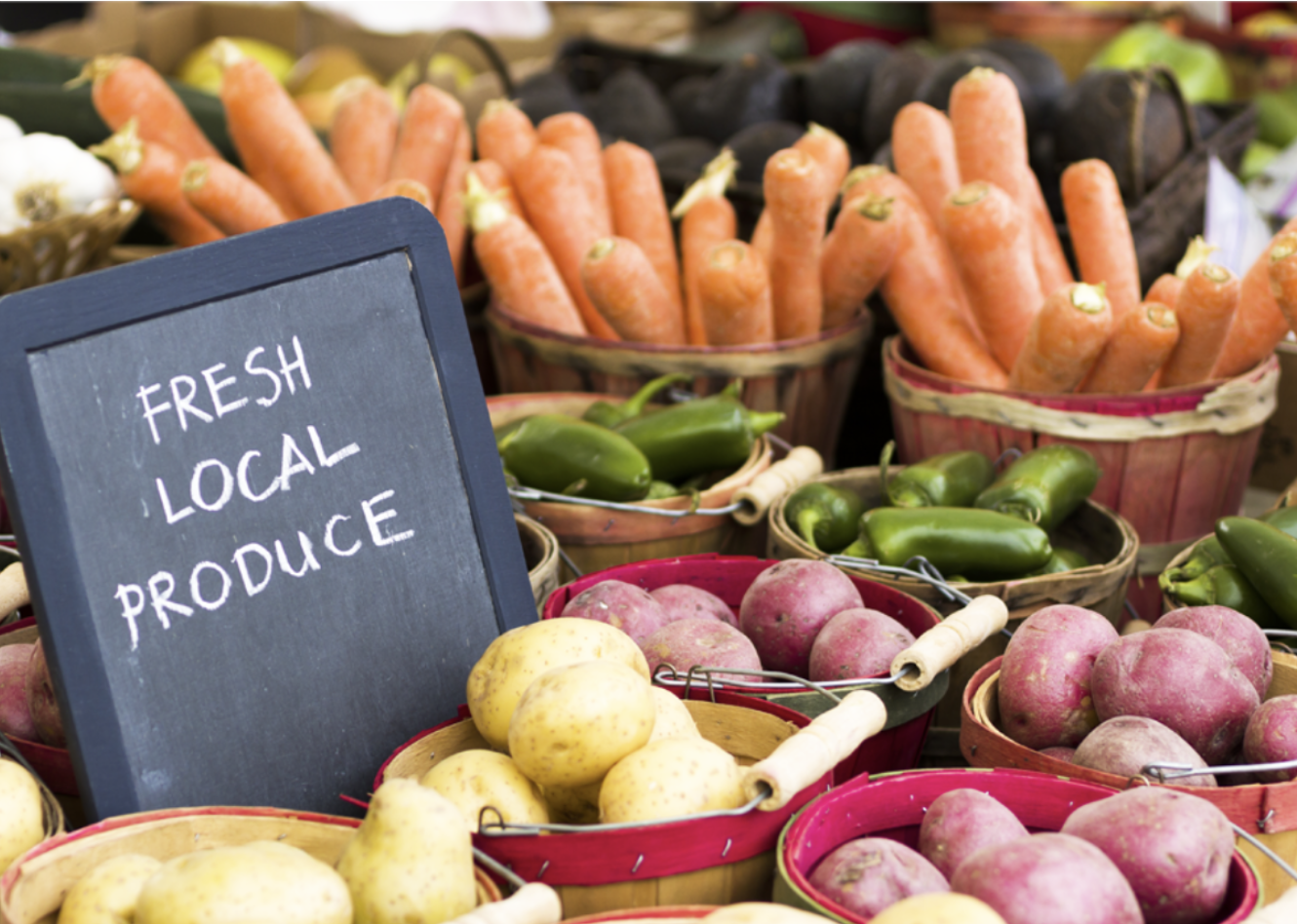
Fresh Local Produce
# We Are What We Eat by Linda Kerth
This is the third article in a series about food access in the foothills area. The first was about what we are eating, and the second, why we are eating food that harms us. Now we arrive at the conclusion: What we could be eating!
It is Saturday morning and you’re at your local farmers’ market. It is a warm summer day and the market is livened by a festive spirit. People wave to neighbors as they head to stalls of fresh produce. There are about 20 stalls stacked with a kaleidoscope of veggies — red, yellow, green, deep purple. Some stalls are selling crafts, others showcase flowers with colors as vibrant as the fruits.
There are a variety of meats and produce that you can find in a chain grocery an hour’s drive away, but here you can trust in the freshness and lack of added chemicals. Fresh and frozen chicken and grass-fed beef (both inspected and stamped by the USDA) appeal to shoppers due to their quality and reasonable prices. Dairy products from area farms are cool and fresh; local berries gleam like jewels in their baskets. Shelves of local honey glow in the sun. Picnic tables are set up for customers to sit and enjoy fresh-roasted coffee or a cup of tea along with a scone or homemade bun still warm from the oven slathered with homemade butter and jam or cream cheese.
**The many benefits of a farmers’ market!**
One of the most important social benefits of farmer’s markets for both buyers and sellers is the atmosphere — friendly vendors eager to talk, who hand you a recipe for that novel vegetable you just bought. Farmers’ markets are gathering places that strengthen social ties and connect residents with local growers and each other. They become a vital source of regular community engagement and they offer more than just wholesome goods for the community.
By planning different activities for a variety of interests, such as music or specially made ethnic foods, they create an engaging, comfortable and family friendly atmosphere that encourages people to relax and take their time. Parents can bring their children and teach them about healthy foods and how they are grown. Petting zoos or games are available specifically for children. Families can have fun and do their grocery shopping at the same time. If consumers can rely on freshly harvested local produce, dairy, and locally grown meats and handmade crafts along with festive surroundings, the market will become the go-to for fresh foods and other goods — it offers a multitude of benefits a supermarket simply cannot.
**Where should this market be?**
There are a few farmers’ markets in Whatcom County but none in the Kendall/Maple Falls area. We are at the heart of a food desert, and a market in Kendall would benefit all the Foothills communities. The Kendall/Columbia Valley area is the most densely populated area of Whatcom county with approximately 7,000 (let me double check this number) residents; the whole of the Mt. Baker School District has over 12,000 residents.
We know from statistics gathered at the World Cafés and all the surveys and questionnaires over past decades, that people here are starving (pun intended) for fresh food! A survey by the Whatcom Community Food Assessment in 2021 showed 70% of the people responding live in the Mt Baker School district and are consumers — not farmers or people associated with agriculture. On surveys the choice might be “food” or “store” or other terms, but food access is at the heart. Food access has been and still is one of the top two essential needs (along with health care) in this area. A store, however, especially a chain store, would only bring you more of the same stale veggies (from who knows where), and the same ultra- processed foods that have been proven harmful.
**Economic benefits for farmers**
Markets provide farmers with the opportunity to sidestep wholesalers, distributors and retailers and to market their goods directly to their customers, allowing them to sell at prices that are mutually advantageous. Customers save gas and time when there’s a local farmers’ market, but so do farmers, who could eliminate the costs of packaging and overall transportation costs, leaving a lower carbon footprint. The markets create reliable sources of vendor income that can be depended upon due to a strong customer base. They serve as powerful engines of economic activity and growth for the whole community. This multiplier effect has been repeatedly observed in other towns and cities across the country. Building a farmers’ market near Kendall would spur a significant economic potential for the area. With modest vendor fees, farmers’ markets also provide a flexible, low cost, low risk venue where new caterers, chefs, small farms and artisans can begin marketing their goods. And farmers’ markets often eliminate non-local competition.
With the reduction in production costs and increase in direct sales, farmers would flourish and could potentially increase their crop production, experiment with new crops, and hire more farm workers from the local population. Resident crafters would also share in the extended market economy, as would entertainers and others who would benefit from sharing their talents in such an environment. The market could serve as the heart and soul of a whole new local economy.
**Environmental benefits**
Most local farmers prefer sustainable agricultural practices and many respond positively to requests for organic foods; others have altered growing methods to protect the soil, fresh water sources, and our farmlands. Small farm owners are the most likely to stop the use of hazardous pesticides and herbicides that endanger the health of human and wildlife populations and pollute our environment.
**Inequity**
Chain stores lack a vested interest in opening in rural areas like ours with lower socioeconomic status (where the population is often composed of lower income families and elderly people). An example of this actually occurred in Bellingham when an Albertsons store closed in the Birchwood Neighborhood (addressing food deserts in Whaatcom County  ). Despite the low income barrier, it is certain that this Columbia Valley area has a multitude of potential customers. One of the basic tenets of a sustainable food system is that community residents actively participate in its design and implementation.
**The time is right. The time is now! Get involved! Help bring a farmer’s market to our area!** Contact Linda Kerth at: kerthlinda@gmail.com